
Introduction
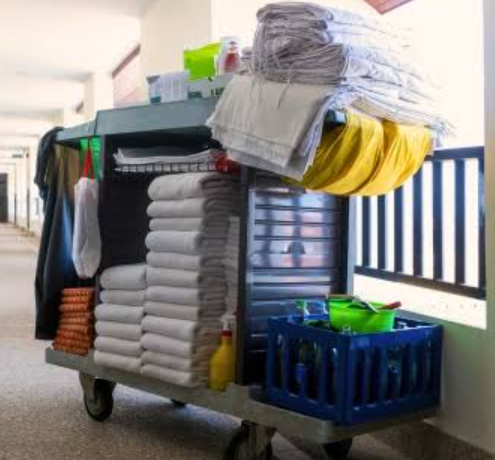
A housekeeping trolley is a mobile workstation that influences how quickly and consistently attendants can prepare rooms. It carries clean linen, towels, guest amenities, cleaning products, tools, and collected waste, so its design affects both productivity and presentation. Choosing a trolley only by appearance or maximum capacity can create problems when it is placed in a real corridor, lift, pantry, or guestroom doorway. Hotels should first observe the route attendants follow, the number and type of rooms served, the replenishment system, and the items carried during a normal shift. The ideal unit gives staff organised access without becoming difficult to steer or park safely. A practical assessment should include dimensions, storage layout, materials, wheels, handles, waste separation, security, replacement parts, and cleaning requirements before the hotel approves the trolley for daily use.
1. Match Capacity to the Service Route
Trolley capacity should reflect the number of rooms handled between pantry visits rather than simply carrying the largest possible load. A large trolley may reduce replenishment trips, but it can also block narrow corridors, fit poorly inside lifts, and become harder to control when fully loaded. Compact properties may benefit from smaller units supported by well-positioned linen pantries, while larger floor plans may require more storage and separate bags for used linen and waste. The team should list typical quantities of sheets, duvet covers, pillowcases, towels, amenities, tissue, cleaning bottles, and tools for one service round. These items can then be arranged in a sample trolley to confirm the real capacity. Measuring lift doors, corridor turns, storage rooms, and parking positions prevents costly surprises after delivery and helps staff maintain clear guest circulation.
2. Review Compartments and Access
Internal organisation determines whether attendants can find products quickly and keep clean items separated from used materials. Adjustable shelves provide flexibility when room standards or packaging change, while drawers or closed compartments can protect small amenities and guest supplies. Side holders may be useful for mops, brushes, warning signs, or vacuum accessories, but they should not make the trolley wider than planned. Linen shelves need enough depth and height for folded stacks without crushing them. Waste and soiled-linen bags should be secure, easy to remove, and positioned away from clean supplies. Doors or covers may improve presentation in guest areas and provide additional control over stock. During evaluation, attendants should reach frequently used items from a comfortable position. A logical layout reduces repeated bending, searching, and repacking throughout a shift, supporting both speed and consistent room setup.
3. Examine Materials and Wheels
The trolley frame and panels should tolerate regular movement, cleaning, contact with door frames, and the weight of daily supplies. Metal, engineered panels, and durable plastics each offer different balances of strength, weight, appearance, and maintenance. Corners and bumpers can help protect both the trolley and hotel walls. Wheels deserve particular attention because poor movement makes even a well-organised trolley tiring to use. Wheel diameter, bearing quality, floor surface, noise, swivel action, and brakes all affect control. Hotels should test the unit while loaded on carpet, tile, ramps, lift thresholds, and tight turns found at the property. Handles should allow attendants of different heights to push with a stable posture. A trolley that rolls quietly and predictably improves safety, reduces strain, and causes less disturbance to guests during morning or evening service.
4. Consider Safety and Maintenance
A trolley must remain stable when shelves are full and bags contain uneven loads. Heavy products should be stored lower where possible, and brakes should hold the unit securely during room service. Cleaning chemicals need controlled storage according to hotel procedures, ideally separated from guest amenities and clean linen. Surfaces should be smooth enough to wipe, with limited gaps where dust or spills can collect. Removable bags, shelves, or containers simplify routine sanitation. Maintenance planning should cover wheels, brakes, handles, hinges, bumpers, locks, and bag attachments because these components experience frequent wear. Before purchasing several units, the hotel should ask whether replacement parts are available and whether staff can perform basic adjustments. Regular inspection extends service life and prevents a small mechanical issue from becoming a safety risk or disrupting an entire housekeeping floor.
Selecting the Right Trolley Supplier
Suppliers should receive accurate information about corridor widths, lift dimensions, room count, service method, preferred materials, and products carried on each shift. Photographs or floor measurements can make the discussion more precise. The hotel should request overall dimensions, trolley weight, recommended load, shelf configuration, wheel specifications, bag capacity, assembly details, warranty information, and replacement-part availability. Bali Hotel Amenities by Orensa supplies housekeeping products alongside linen, amenities, cleaning tools, waste bins, laundry bags, and other operational requirements. This broader perspective helps properties consider how the trolley will work with the supplies placed inside it. A sample or demonstration is valuable for larger purchases, especially when supervisors and attendants participate in the evaluation. Their practical feedback helps management choose equipment that supports efficient service while remaining suitable for the guest environment.
More Information
For trolley specifications and purchasing assistance, visit https://balihotelamenities.net, contact WhatsApp +62 895-1800-4748, or email sales@orensaglobal.com.