
Introduction
Laundry bags support several different activities inside a hotel. Guests may use an in-room bag for paid laundry, while housekeeping teams use larger bags to collect linen, towels, uniforms, or waste during daily service. Because these tasks are different, the same material and size should not automatically be used for every purpose. A well-designed system helps staff separate items, prevent cross-contamination, control loads, and identify destinations before products reach the laundry area. Hotels should map the complete movement from guestroom to trolley, service lift, sorting point, laundry, clean storage, and return. The bag must fit this route and the equipment used along it. Material strength, closure, handles, colour coding, labels, washability, ventilation, and storage all affect performance, staff safety, and the consistency of the property’s linen-handling procedure.
1. Separate Guest and Operational Uses
Guest laundry bags are part of the room presentation and should be simple to understand, appropriately sized, and compatible with the hotel’s laundry form or collection procedure. Operational bags carry greater loads and need stronger seams, reliable closures, and handling features suited to staff. Hotels may also separate bed linen, bathroom linen, uniforms, heavily soiled items, or different processing destinations. Clear colours or labels reduce sorting mistakes, especially when several departments share service routes. The property should define what each bag may contain and its maximum practical load. Filling a large bag completely may make it unsafe to lift even when the material can hold the weight. Written procedures and consistent identification help new staff follow the system. They also support traceability when linen is transported to an external laundry or between buildings within a resort complex.
2. Evaluate Material and Construction
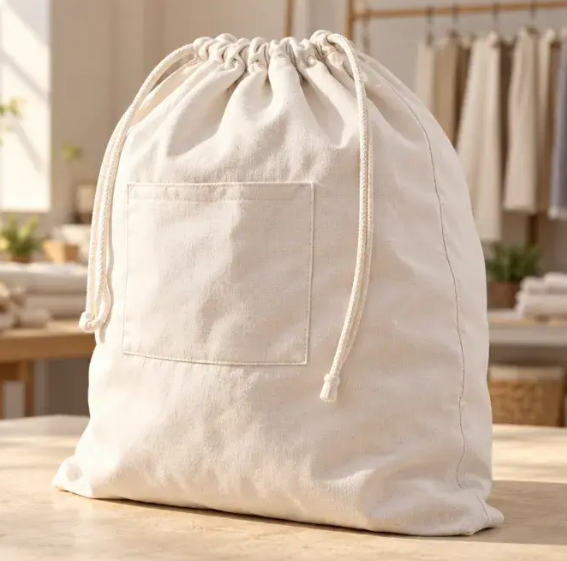
Laundry-bag material should suit the contents, cleaning method, moisture level, and expected handling. Reusable fabric bags may need washing and drying, while coated or synthetic materials can offer different resistance to moisture and wiping. Breathable construction may be appropriate for some linen flows, but contaminated or wet items may require more controlled handling according to hotel procedures. Buyers should inspect seam strength, reinforcement around handles, closure quality, and the durability of printed or sewn identification. Drawstrings, zips, ties, and flap closures each affect speed, containment, and maintenance. Samples can be loaded with realistic linen quantities and moved through trolley frames, chutes where permitted, lifts, and sorting areas. Testing reveals whether the bag sags, catches, leaks, becomes difficult to grip, or exceeds a safe weight before the hotel orders operational quantities.
3. Choose Practical Sizes and Closures
Bag dimensions should match collection frequency, trolley holders, laundry carts, storage shelves, and staff handling limits. A very large bag may reduce the number of containers in circulation but encourage overloading and awkward movement. Several moderate bags can improve separation and lifting, although they require more identification and storage. In-room guest bags should hold a reasonable personal laundry load without occupying excessive wardrobe space. Closures need to be fast enough for routine use while keeping contents contained during transport. Drawstrings are simple, zips provide a more complete closure, and ties or flaps can suit particular workflows. The property should test the closure while staff wear normal work gloves if applicable. Consistent sizing also helps calculate how many bags fit in a trolley or vehicle and how much buffer stock is needed while reusable bags are being cleaned.
4. Establish Cleaning and Storage Procedures
Reusable laundry bags need their own inspection and cleaning routine because they repeatedly contact used textiles and service equipment. The hotel should define when bags are washed, wiped, disinfected, dried, and removed from service. Clean and used bags must be stored separately to preserve the intended workflow. Damp bags should never be folded into enclosed storage where odour or microbial growth can develop. Staff should check seams, closures, handles, labels, and coatings for damage before reuse. A designated repair or rejection standard keeps weakened bags from failing during transport. Inventory should include enough units for active collection, cleaning, clean storage, and replacements. Product codes by colour or function make counts easier. These procedures protect linen handling, reduce last-minute substitutions, and help supervisors verify that each department follows the same collection and separation system.
Sourcing Laundry Bags for Hotel Operations
A supplier enquiry should explain whether the bag is for guestrooms, housekeeping, uniforms, linen transport, or another defined use. The hotel should provide preferred dimensions, load expectations, material, colour, closure, handles, printing or embroidery, wash method, quantity, and delivery schedule. Bali Hotel Amenities by Orensa provides laundry bags together with trolleys, cleaning tools, waste bins, linen, amenities, and other daily hotel supplies. Considering these products together helps confirm that bags fit trolley frames, storage spaces, and the wider housekeeping process. Custom identification may be useful, but minimum quantities and production lead times should be discussed early. A tested sample and written specification give purchasing teams a dependable reference for inspection. The result should be a bag system that is clear for staff, manageable to clean, and suitable for repeated hotel use.
More Information
For laundry-bag specifications and quotations, visit https://balihotelamenities.net, contact WhatsApp +62 895-1800-4748, or email sales@orensaglobal.com.